
Your refrigerator is working 24/7 to keep food safe, but if the temperature isn’t set correctly, you’re fighting a losing battle. Too warm, and bacteria multiply fast, especially on chicken and dairy. Too cold, and you’re wasting energy while freezing lettuce solid. Knowing what temperature a refrigerator should be isn’t just about food safety: it’s about extending shelf life, cutting energy bills, and keeping your kitchen running efficiently. This guide walks you through the exact settings, why they matter, and how to verify your fridge is actually holding the right temperature.
Table of Contents
ToggleKey Takeaways
- The FDA and USDA recommend keeping your refrigerator at 40°F (4.4°C) or below to prevent harmful bacteria like Listeria and Salmonella from multiplying rapidly.
- The ideal refrigerator temperature range is between 35°F and 38°F for optimal food safety and freshness, with natural temperature zones that allow proper storage of different food types.
- Use a basic appliance thermometer to verify your fridge’s actual temperature monthly, as built-in displays can drift and factory settings may not match your kitchen conditions.
- Maintain an airtight door seal and clean condenser coils quarterly to prevent temperature creep, which forces your compressor to work harder and waste energy.
- Set your freezer to 0°F (-17.8°C) or below to stop all bacterial growth, while avoiding overstuffing your refrigerator to allow proper air circulation throughout.
- Avoid setting your refrigerator below 35°F or to the coldest setting, as this can damage produce and waste energy without improving food safety beyond the recommended range.
The Ideal Refrigerator Temperature Range
Why 40°F Matters for Food Safety
The U.S. Food and Drug Administration (FDA) and the U.S. Department of Agriculture (USDA) recommend keeping your refrigerator at 40°F (4.4°C) or below. This isn’t arbitrary, it’s the threshold where harmful bacteria like Listeria, Salmonella, and E. coli slow their reproduction dramatically. Above 40°F, these pathogens can double in number every 20 minutes on foods like raw poultry, deli meats, and prepared leftovers.
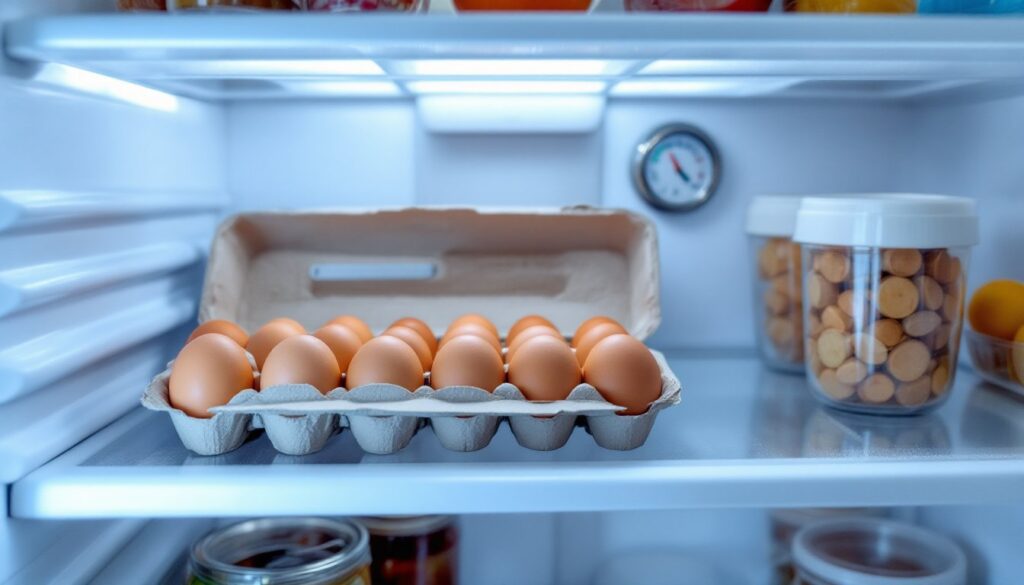
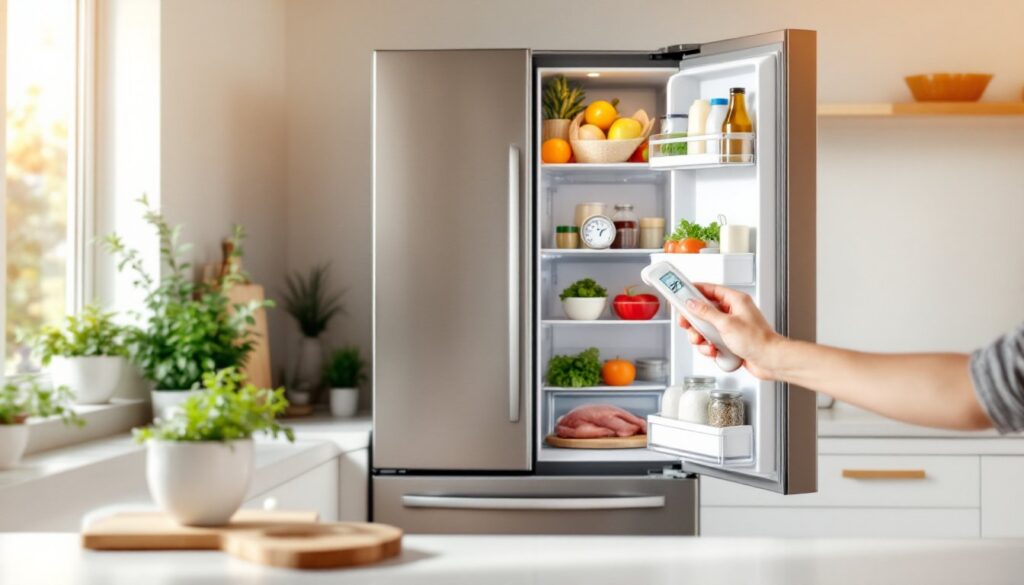
But, not all food in your fridge needs the same temperature. Your refrigerator naturally has temperature zones: the coldest spot is usually the back lower shelf (around 35–38°F), while the door is warmest (around 40–45°F). This variation is normal and actually useful. Store eggs, dairy, and raw proteins on lower shelves where it’s coldest. Use the door for condiments and items that tolerate warmer temps. Most USDA guidelines suggest the ideal refrigerator temperature is between 35°F and 38°F for optimal food safety and freshness balance.
How Temperature Affects Food Freshness
Temperature isn’t just about killing bacteria, it’s about slowing ripening, oxidation, and spoilage. At 38°F, most produce stays crisp 50% longer than at 45°F. Dairy like yogurt and sour cream stays fresh an extra week. Even fresh herbs and salad greens last noticeably longer when your fridge hovers in the sweet spot rather than creeping toward 42°F.
Conversely, colder isn’t always better. Fruits and vegetables like tomatoes, bananas, and cucumbers are sensitive to cold damage. Set your fridge below 35°F for extended periods, and you’ll see browning, soft spots, and loss of flavor, even though the food hasn’t actually gone bad. This is why many refrigerators include a separate crisper drawer with adjustable humidity and a slightly warmer zone (around 38–40°F) designed specifically for produce. According to resources like The Kitchn, proper storage zones and temperature awareness dramatically extend the life of fresh ingredients. The rule of thumb: aim for 37–40°F as your target, checking monthly to ensure you’re in the safe zone.
Setting Your Freezer Correctly
Your freezer needs a different setting than your fridge. The USDA recommends keeping your freezer at 0°F (-17.8°C) or below. At this temperature, all bacterial growth stops entirely, and food can safely remain frozen for months (though quality degrades over time). A properly frozen item is safe indefinitely, but ice crystals will form after about three months, affecting texture and taste.
Many modern refrigerators have a single thermostat that controls both compartments. If yours does, set it so the fridge reads 37–40°F and the freezer naturally falls to 0°F or lower. If your fridge has separate controls (fridge and freezer dials), adjust the freezer dial to 0°F first, then fine-tune the refrigerator dial to land between 37–40°F. Never set your freezer higher than 0°F, ice cream will soften, frozen vegetables lose quality faster, and any foods stored long-term risk bacteria reactivation if thawed accidentally. Check your freezer monthly with a thermometer to confirm it’s holding steady.
Common Temperature Mistakes Homeowners Make
Most people never actually verify their fridge temperature, they assume the factory setting is correct. Wrong. Refrigerators arrive calibrated for average conditions, but a sunny kitchen, a poorly sealed door, or an aging unit can shift the temperature by 5–10°F without you noticing. By the time you smell spoiled milk, food has already spent days in the danger zone.
Another common mistake: stuffing the fridge too full. Air needs to circulate to maintain even temperature throughout. Overstuffed fridges create pockets of warmer air, especially near the front and on shelves. Leave 10–15% of shelf space empty and avoid blocking the air vents at the back (usually hidden by the bottom drawer).
Other missteps include setting the fridge dial to “coldest” or “highest” thinking it guarantees safety. Many older dials are unlabeled: “highest” or “max” actually makes the compressor run longer, potentially overshooting and wasting energy. Modern fridges with digital displays are clearer, but even then, resist the urge to dial it down below 35°F. Set it to 37–38°F and leave it alone. Frequent adjustments confuse the thermostat and create temperature swings that actually harm food freshness.
Tools to Monitor and Maintain Proper Temps
The simplest tool is a basic appliance thermometer, either an analog dial or a digital readout. Cost is minimal (usually $5–$15), and accuracy is within ±1°F for most models. Place it on the middle shelf (neutral zone), close the door, and wait 30 minutes before reading. Check again a few days later to spot temperature swings.
For serious monitoring, wireless refrigerator thermometers with Bluetooth or Wi-Fi connectivity (around $25–$50) let you track temperatures on your phone. Some even alert you if the fridge drifts above your set threshold, handy if you have an older unit prone to creeping upward.
If your fridge has a built-in digital display, use that as a starting point, but verify it against a standalone thermometer. Built-in sensors can drift or misread, especially in older units. According to Good Housekeeping’s guide on refrigerator safety, cross-checking with a physical thermometer is the most reliable method.
Maintenance-wise, keep the condenser coils clean (the fins at the back or bottom) and ensure the door seal is airtight. A loose gasket forces the compressor to work harder and the temperature to creep upward. Wipe the seal with warm, soapy water quarterly. If it’s cracked or won’t seal, replacement kits are cheap and straightforward to install.
Conclusion
Keeping your refrigerator at 37–40°F and your freezer at 0°F is one of the simplest, highest-impact moves a homeowner can make for food safety and waste reduction. Verify your current temperature with a thermometer, adjust the dial if needed, and recheck monthly. Clean the door seal and condenser coils to ensure your fridge runs efficiently. These small actions prevent foodborne illness, extend the life of fresh food, and keep your energy bills reasonable.